Genogram Symbols Chart: People, Relationship Lines and Emotional Lines
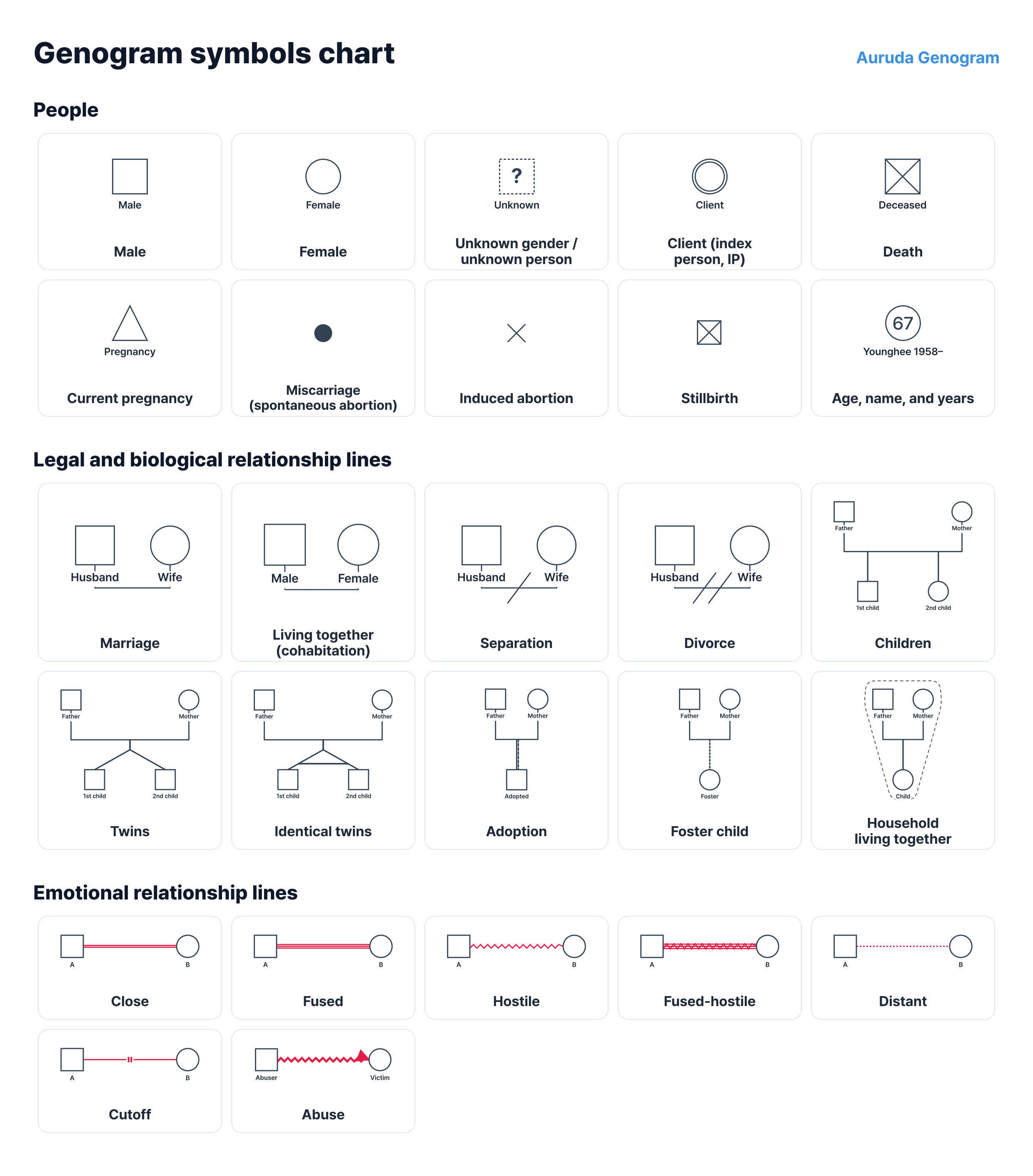
This page is a genogram key: 27 standard genogram symbols, grouped as 10 people, 10 legal and biological relationship lines, 7 emotional relationship lines, each shown with its picture and how it is drawn. Use it to look up a symbol you do not recognize when reading a genogram. The symbols follow the genogram literature of McGoldrick, Gerson and Petry, and every picture is what Auruda Genogram actually draws for that relationship. The order for drawing a genogram and when to use each symbol are covered in section 3 of the genogram guide.
What symbols are used for people on a genogram?
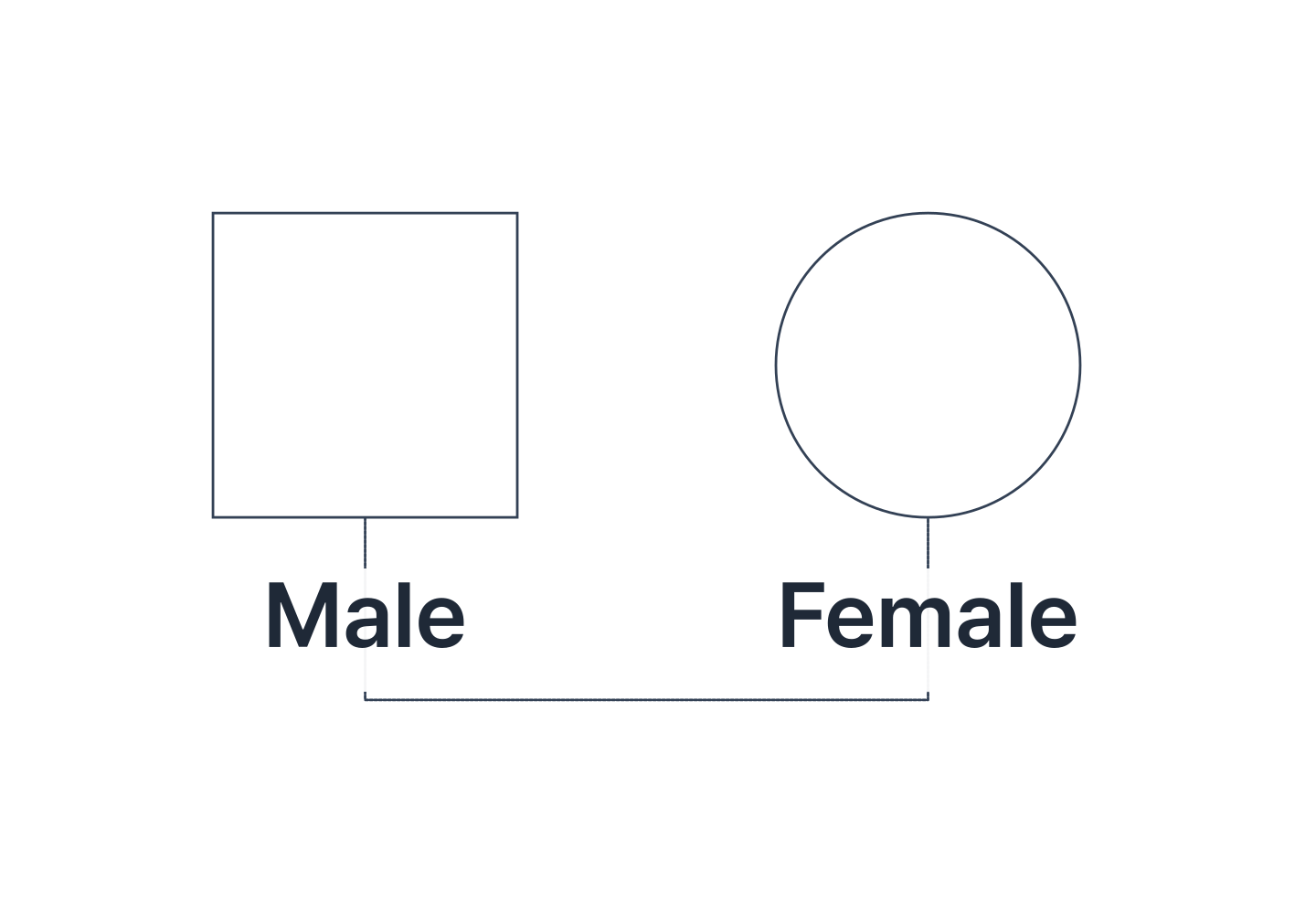
The shape shows gender and the marks added to it show the person's status. A square is a male, a circle is a female and a diamond is unknown gender; a double outline marks the client (index person, IP) and an X inside the shape marks a person who has died. A triangle and small shapes show pregnancy and pregnancy loss.

Male
Square

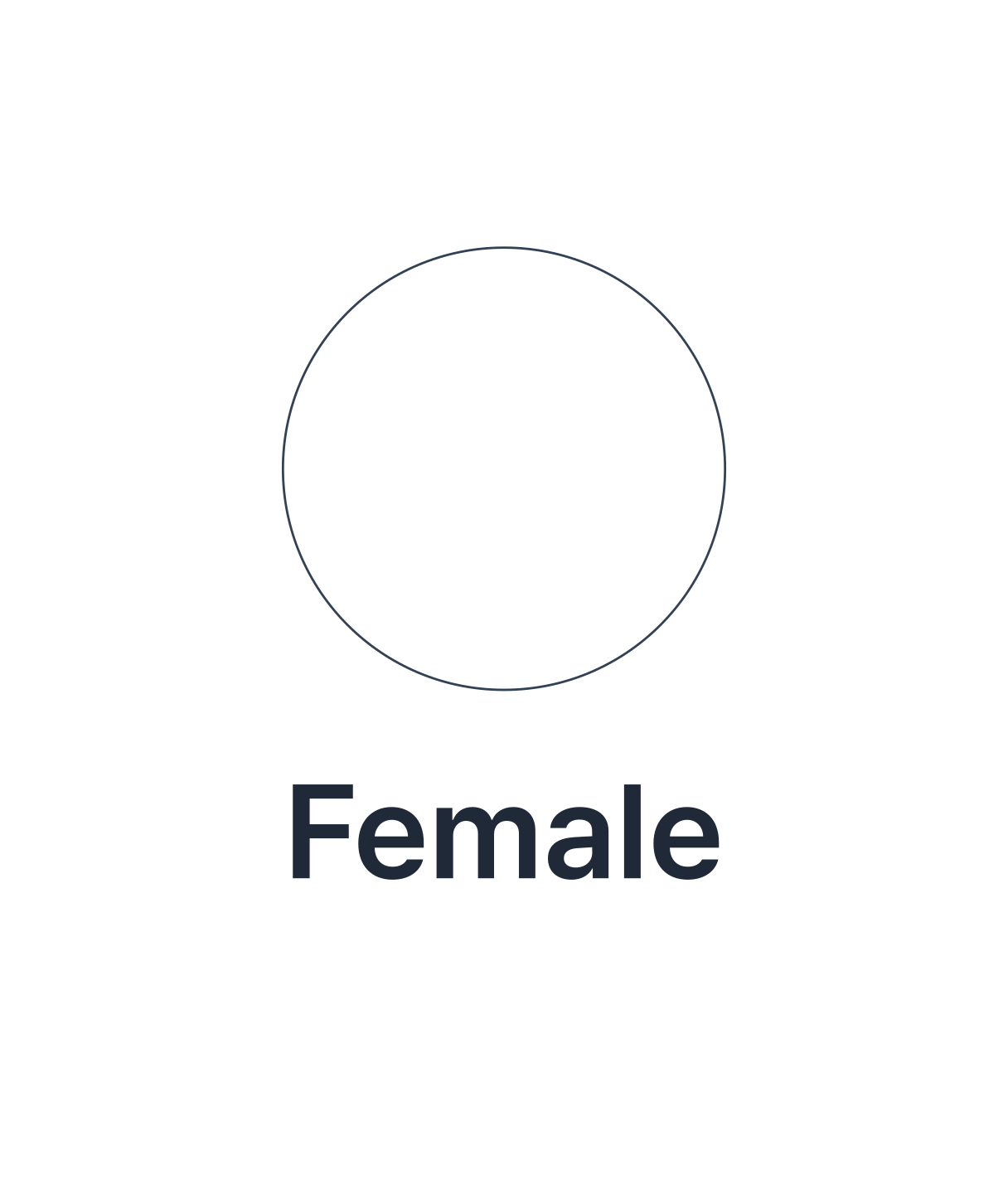
Female
Circle

Unknown gender / unknown person
Diamond (Auruda Genogram draws a question mark inside a dotted square)

Client (index person, IP)
Shape drawn with a double line

Death
X inside the shape, with the year of death

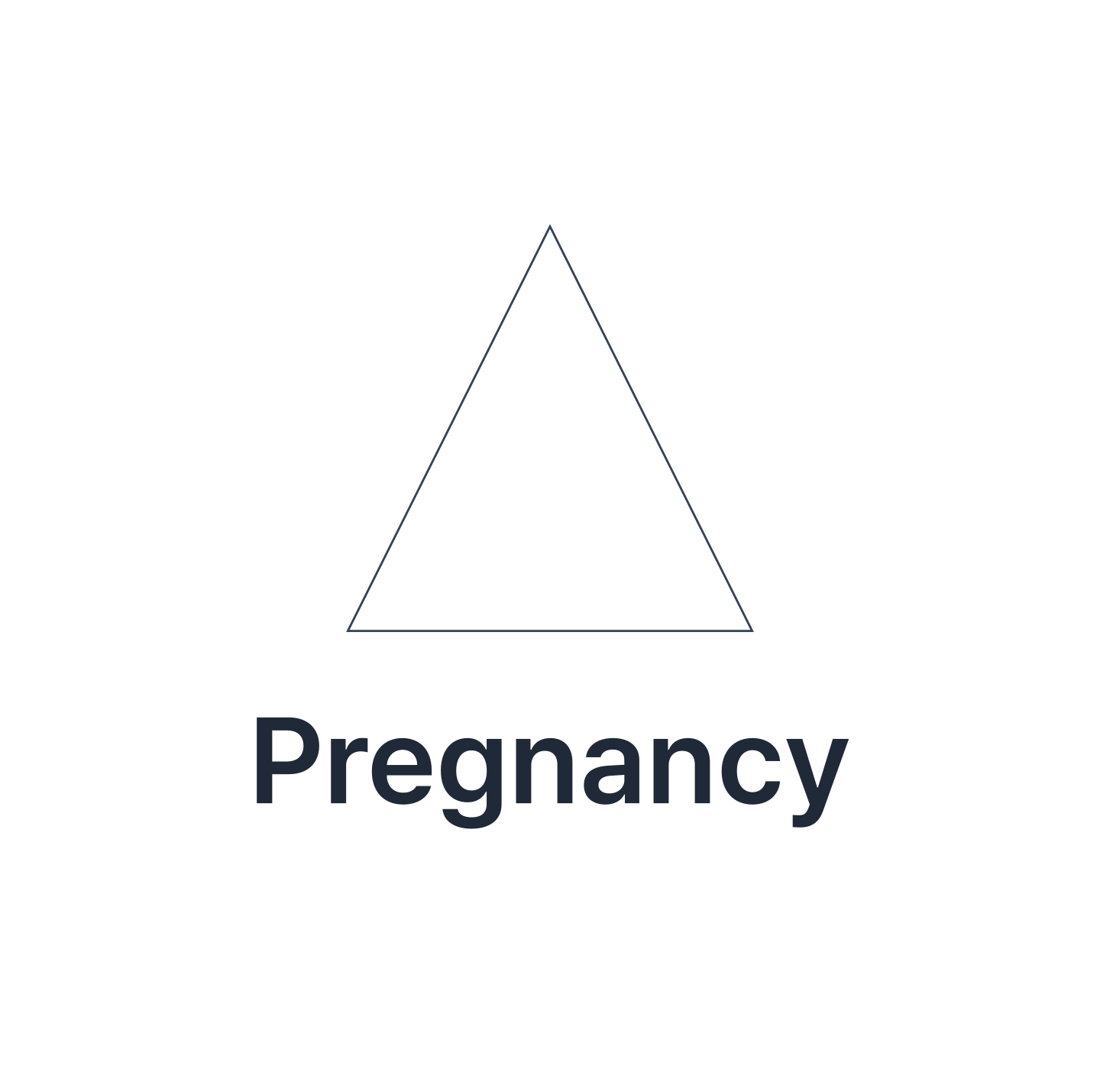
Current pregnancy
Triangle

Miscarriage (spontaneous abortion)
Small filled circle

Induced abortion
Small X

Stillbirth
Small gender shape with an X (Auruda Genogram uses a small square regardless of gender)
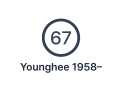
Age, name, and years
Age inside the shape; name and years of birth and death below it







How are marriage, divorce and children drawn on a genogram?
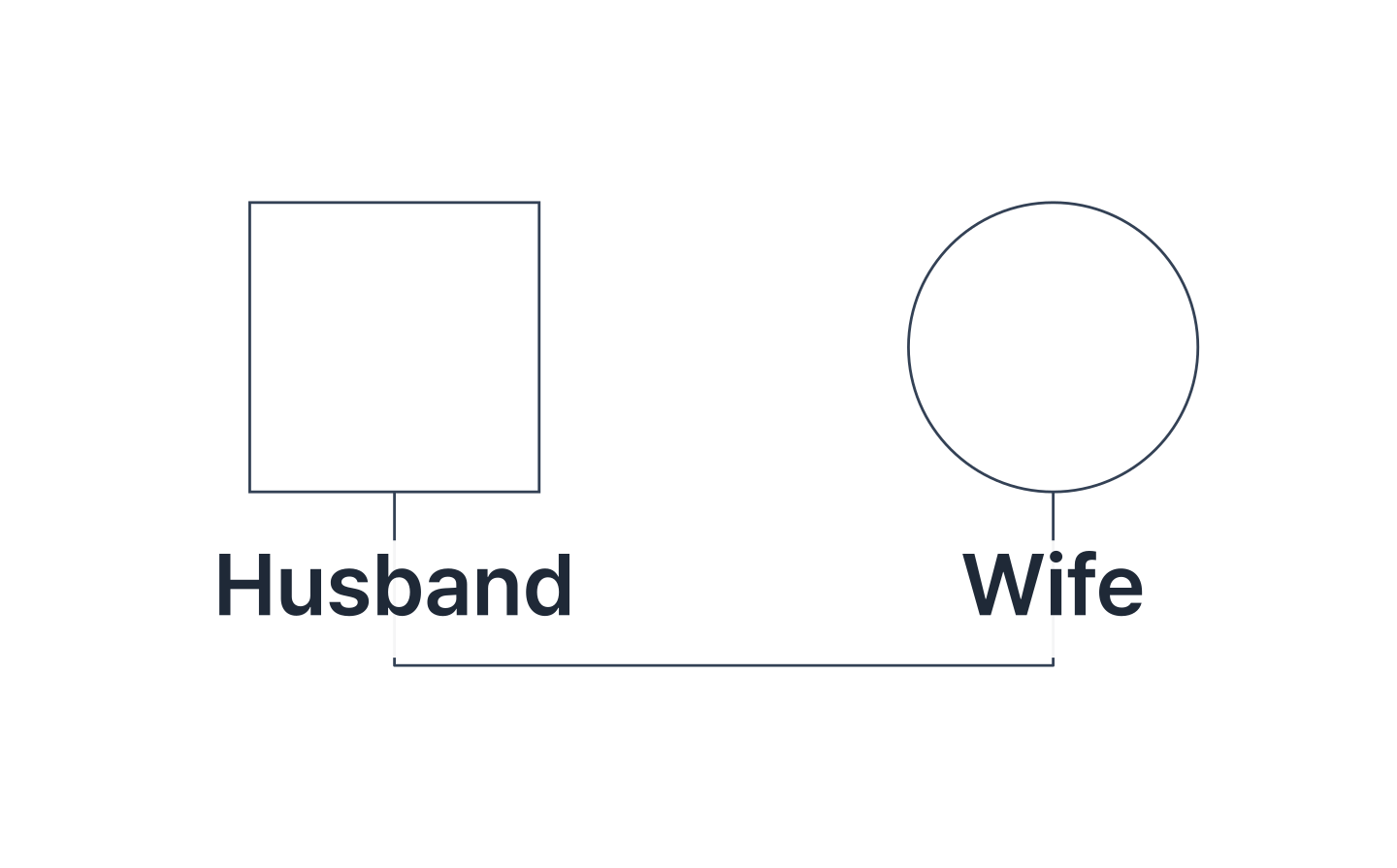
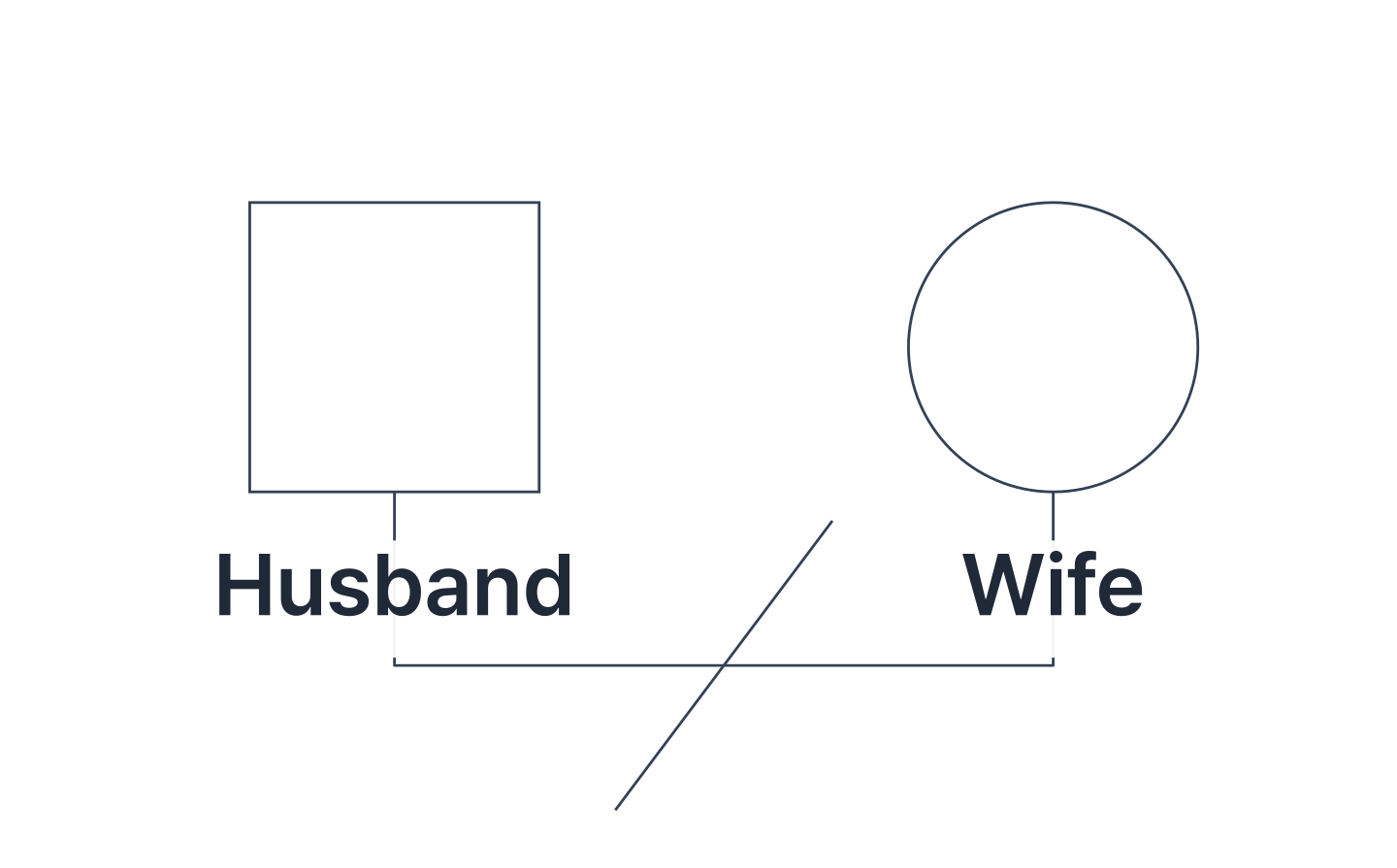
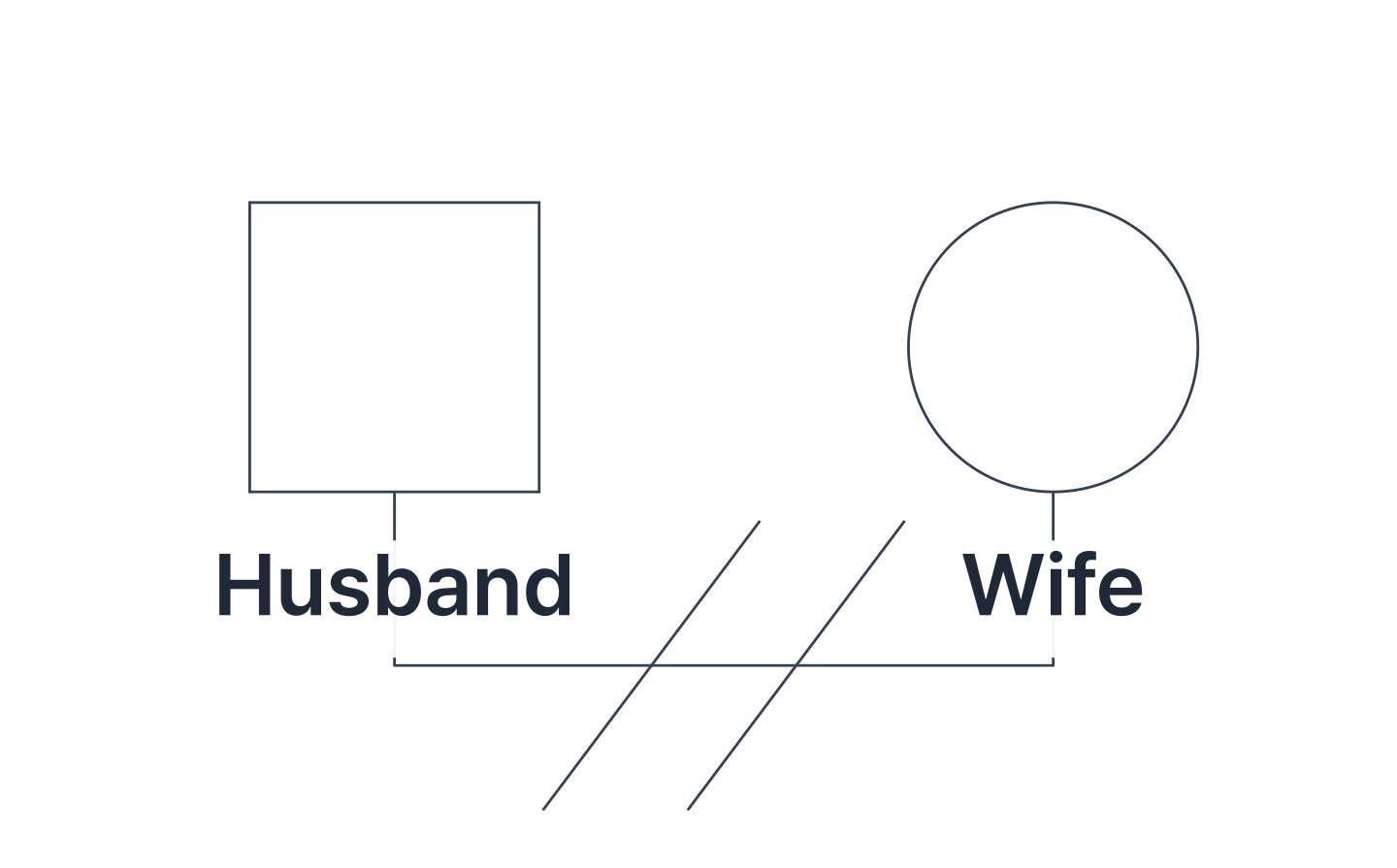
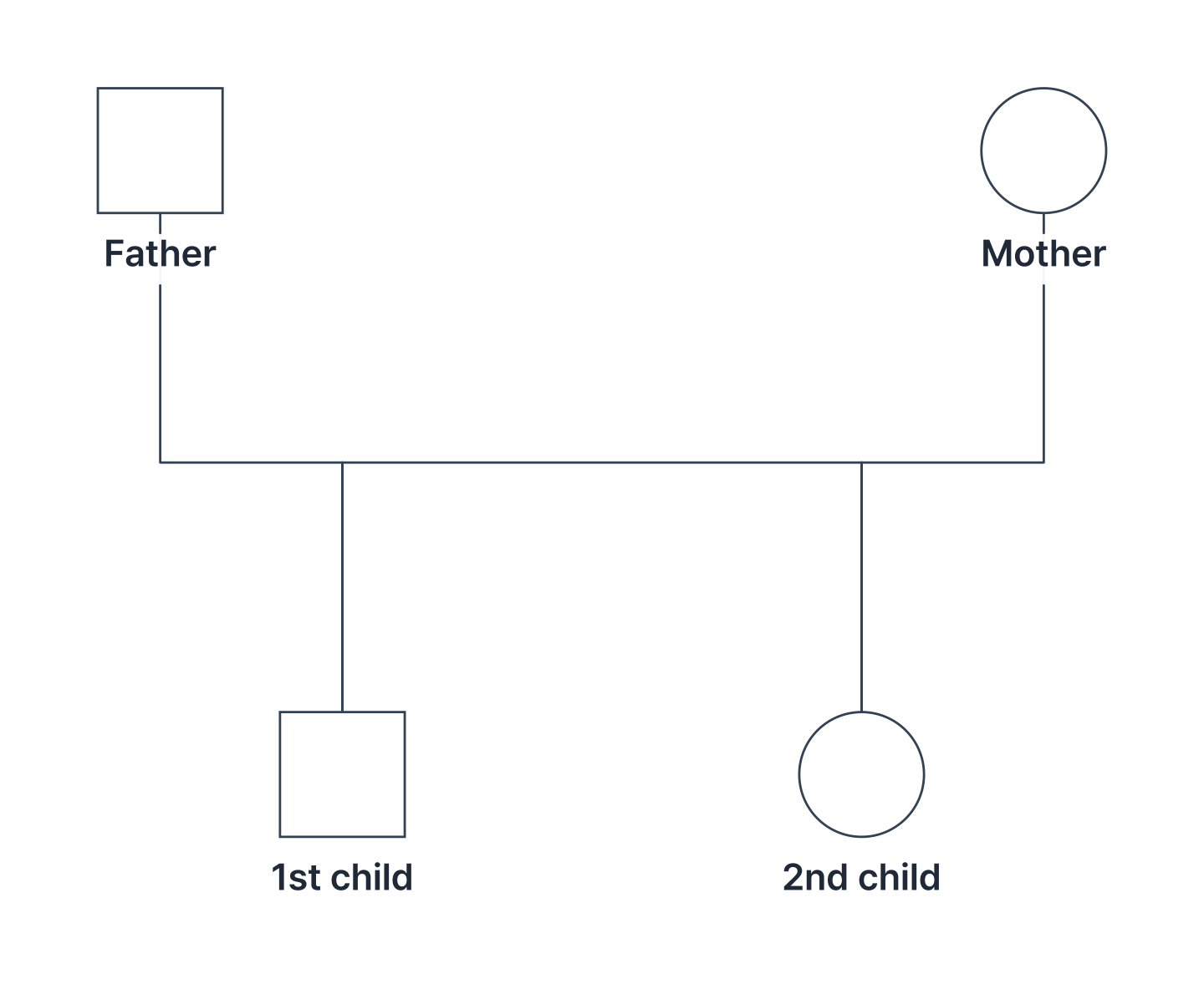
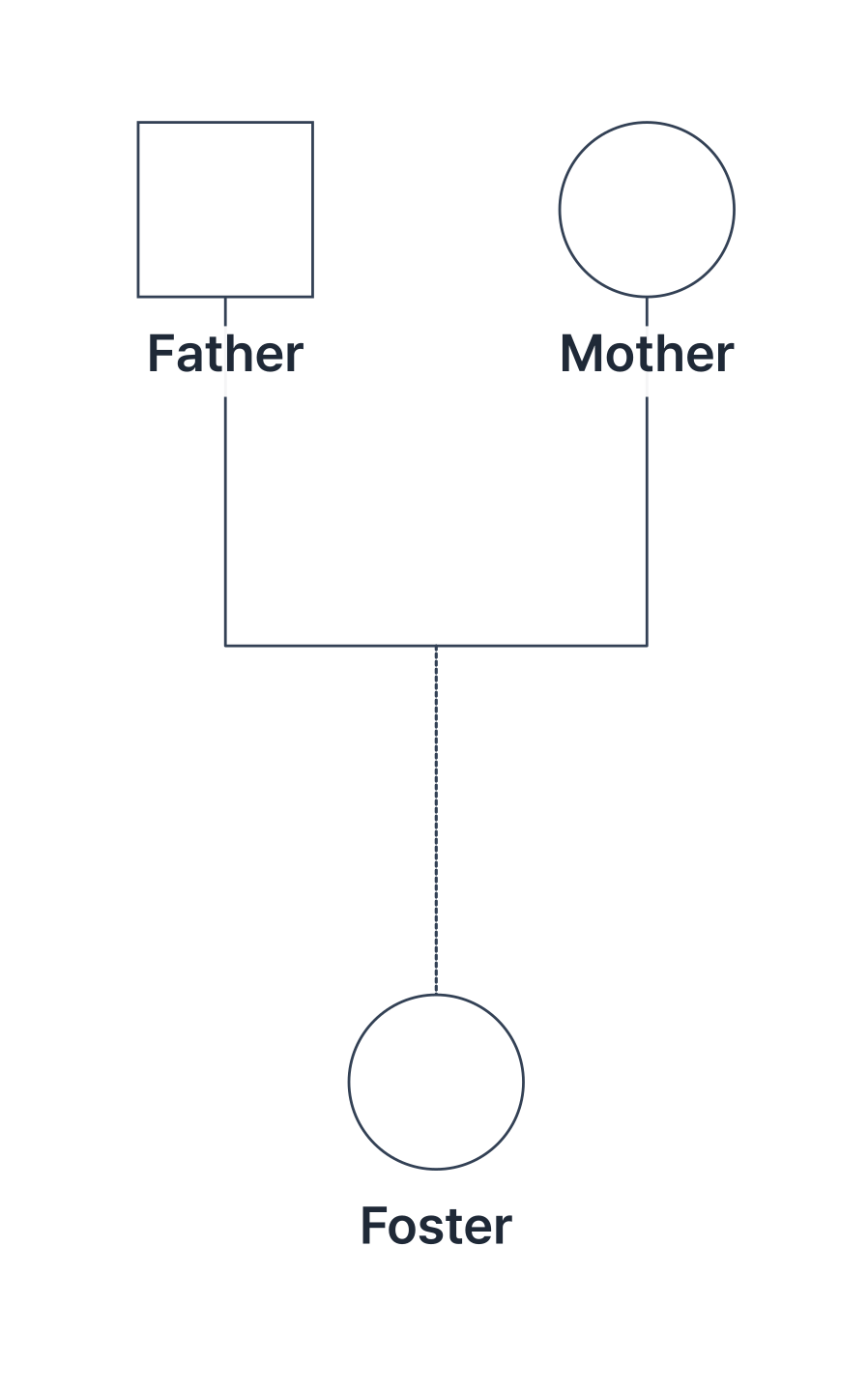
The kind of line shows the form of the relationship, and slashes across it show how far it has come apart. A solid line is a marriage and a dotted line is living together (cohabitation); one slash is a separation and two slashes are a divorce. Vertical lines down from the parents' line are children, and a dotted vertical line is an adopted or foster child.
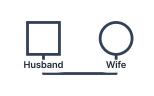
Marriage
Solid line joining the two, with the year of marriage
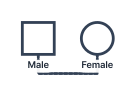
Living together (cohabitation)
Dotted line
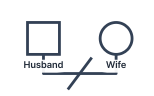
Separation
One slash across the relationship line
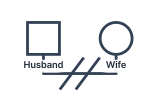
Divorce
Two slashes across the relationship line
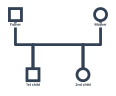
Children
Vertical lines dropping from the parents' relationship line, oldest on the left
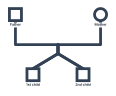
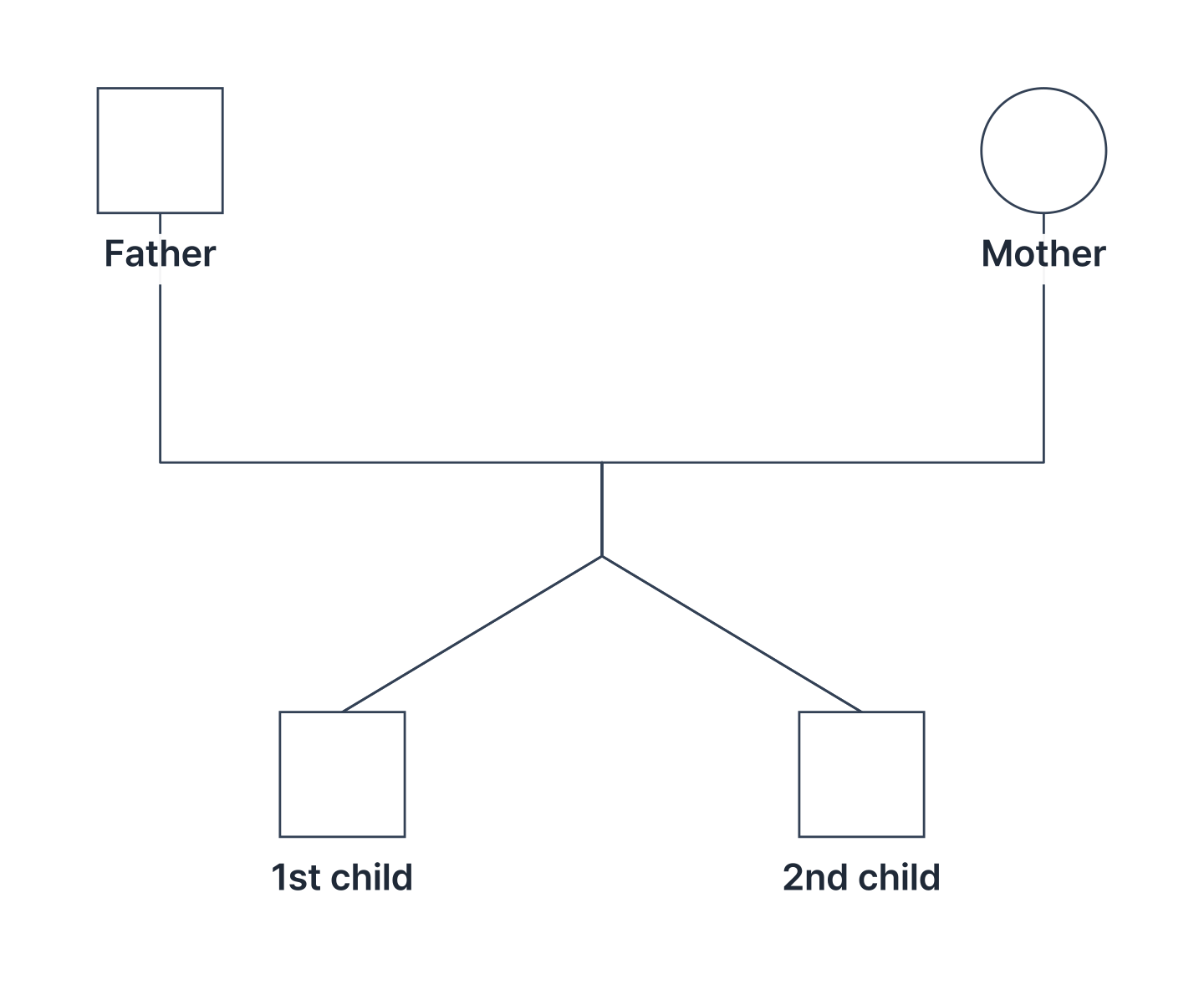
Twins
Two lines branching from one point on the marriage line
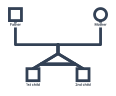
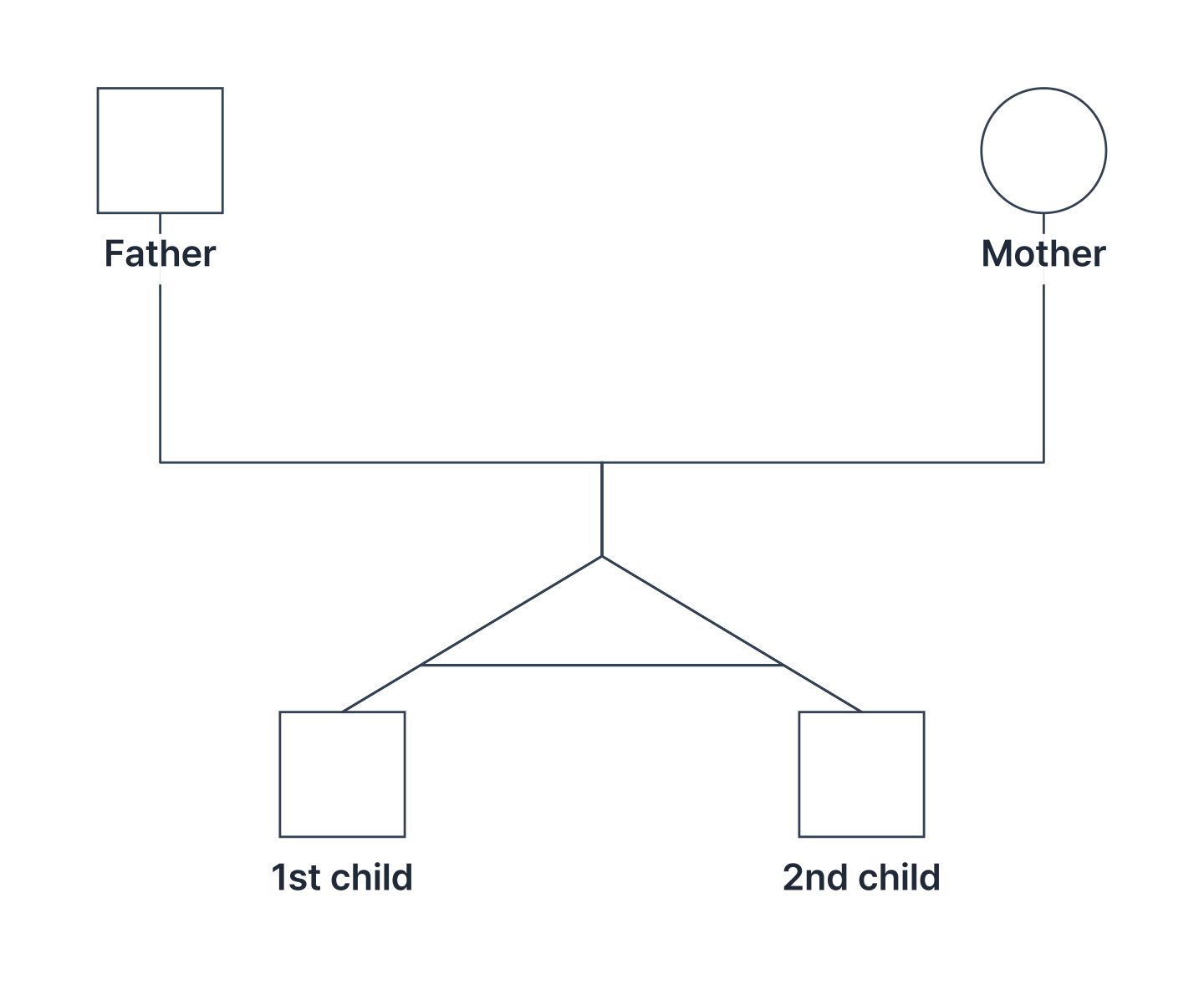
Identical twins
A horizontal line joining the two branching lines

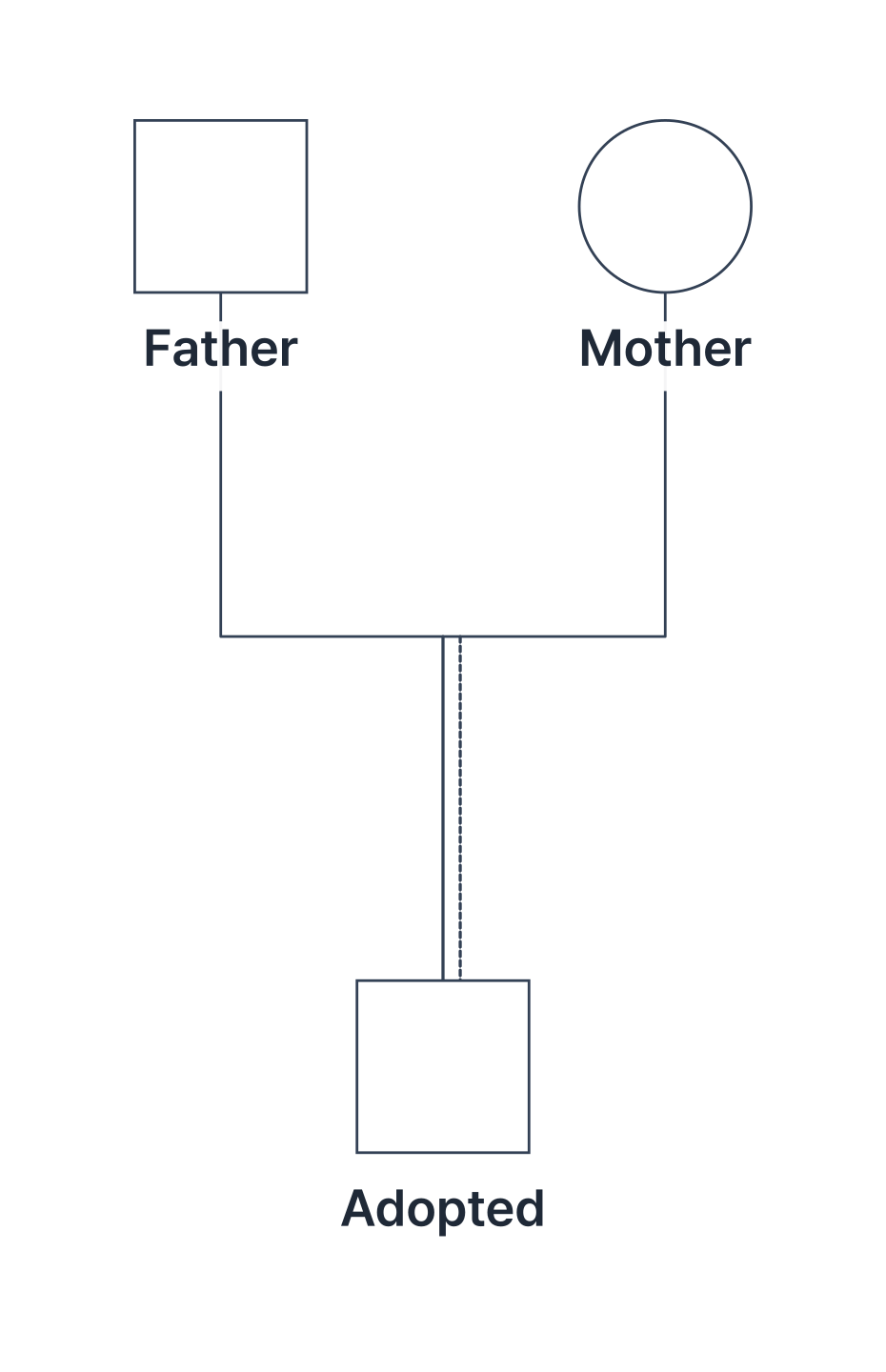
Adoption
Dotted vertical line (Auruda Genogram draws a double line: solid plus dotted)

Foster child
Dotted vertical line

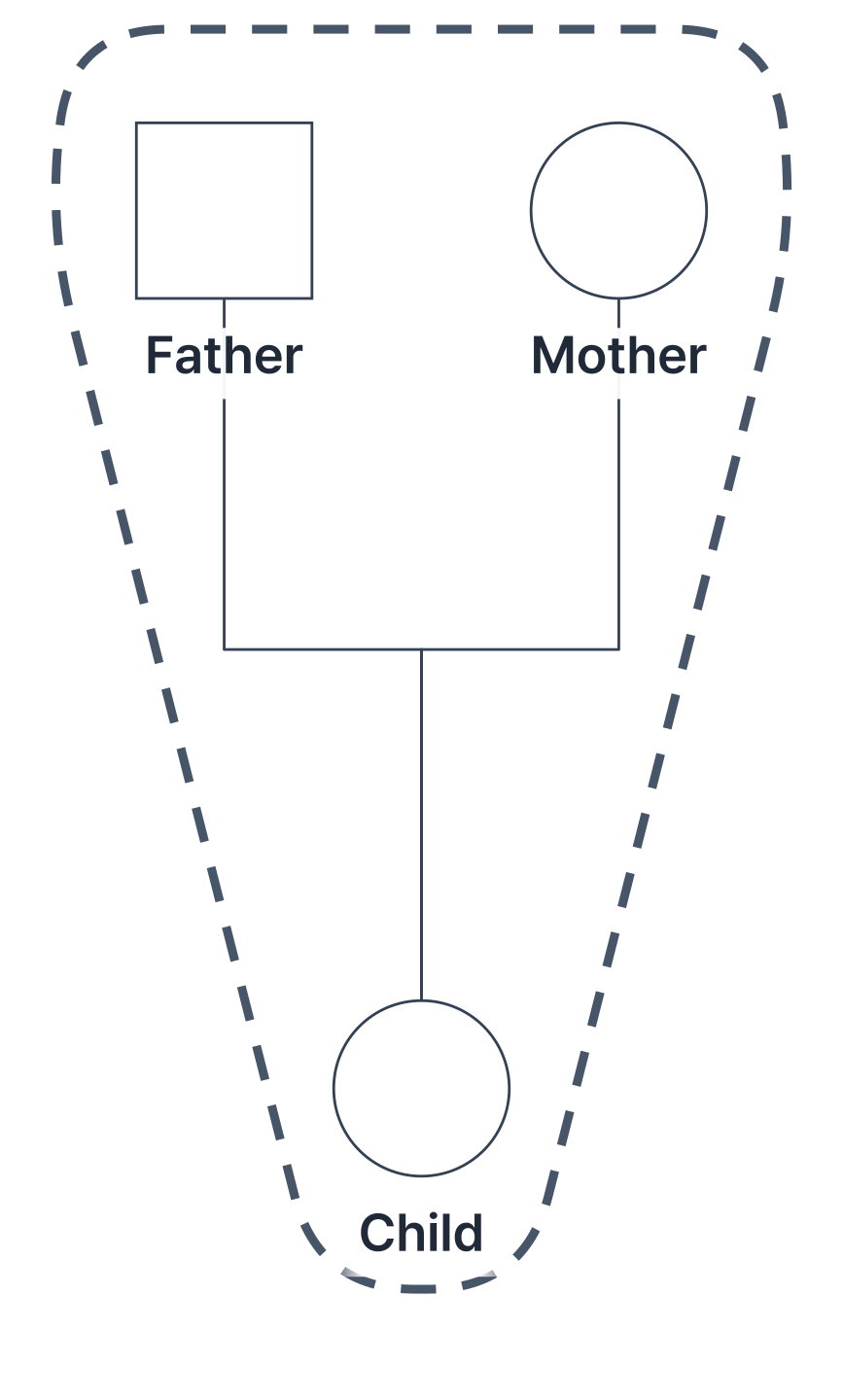
Household living together
Members enclosed in a dotted boundary
What do the relationship lines on a genogram mean?
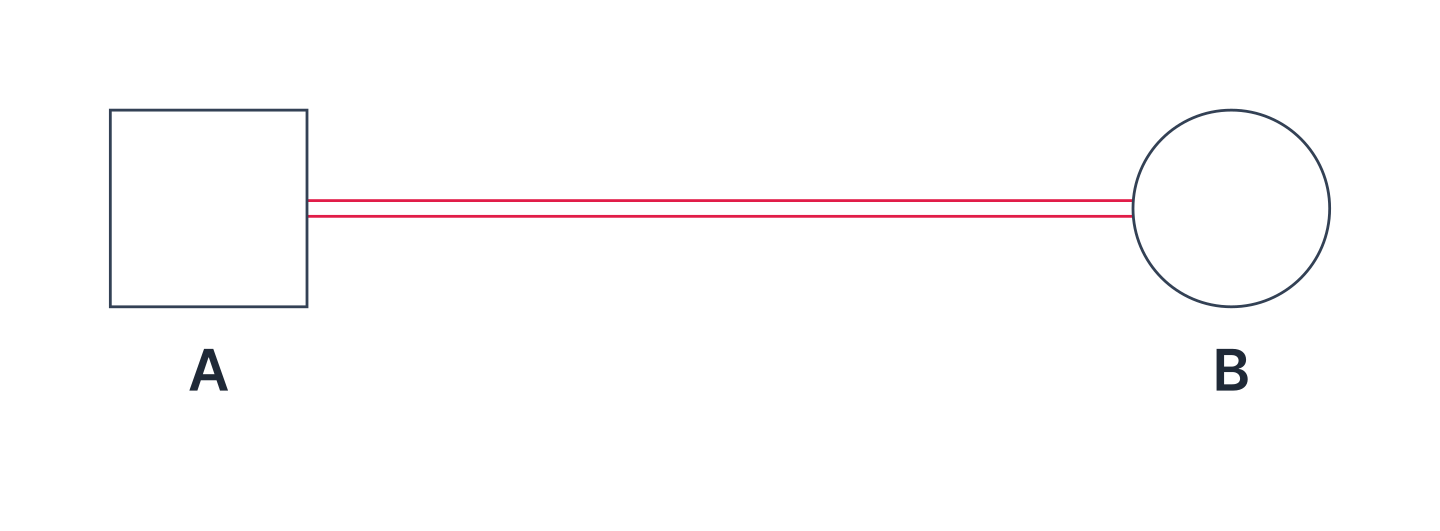
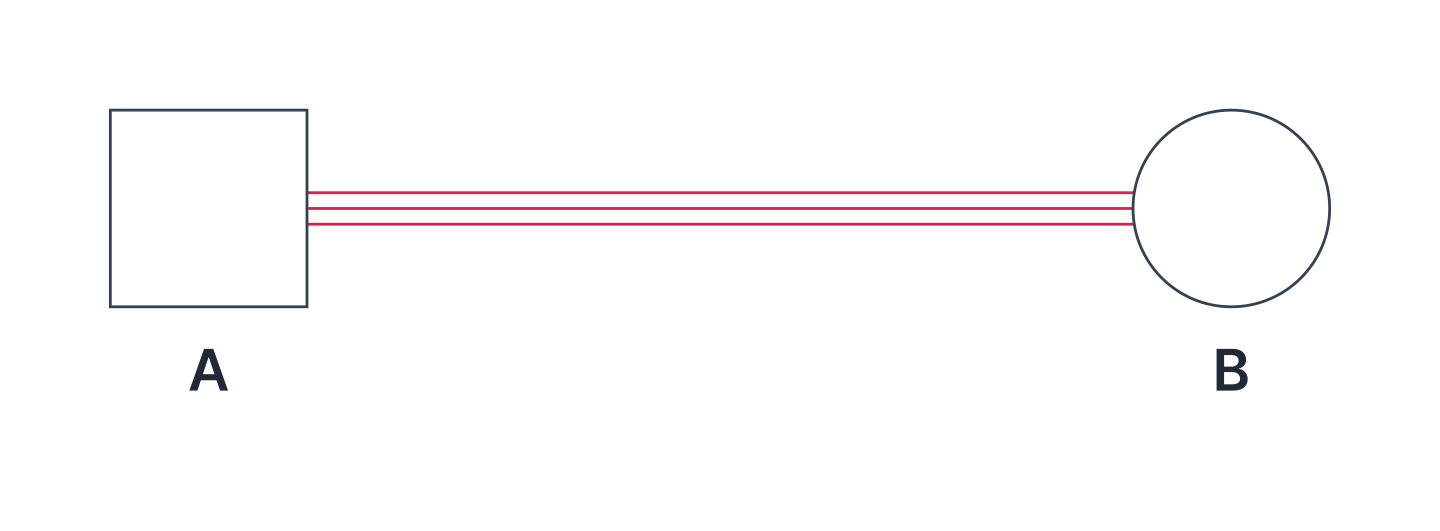
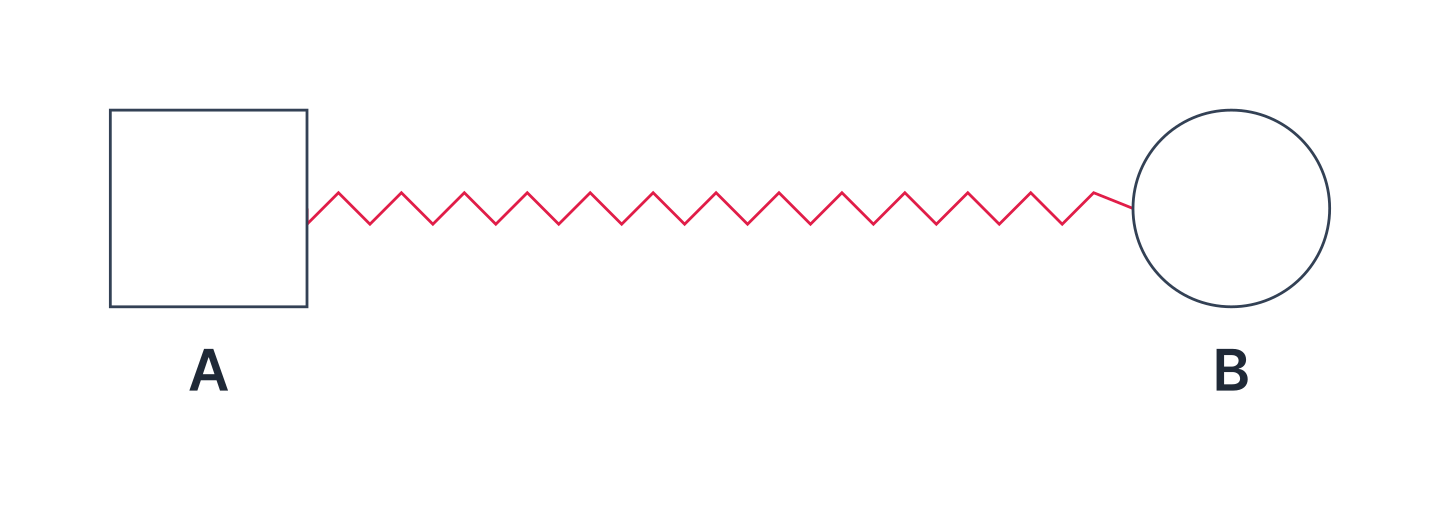
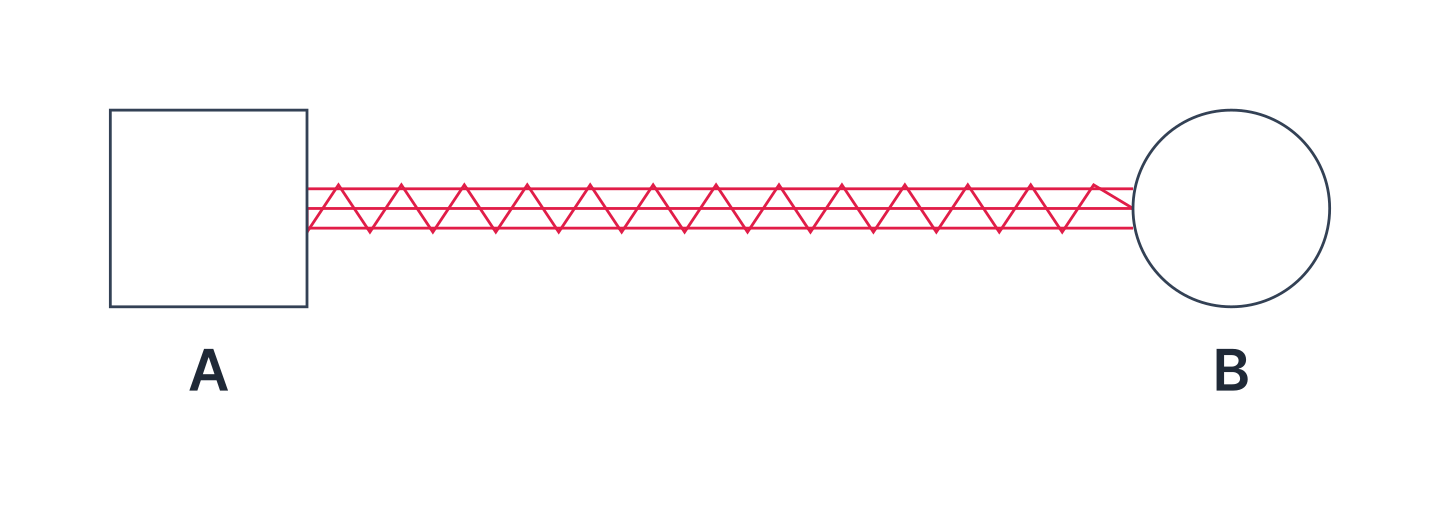
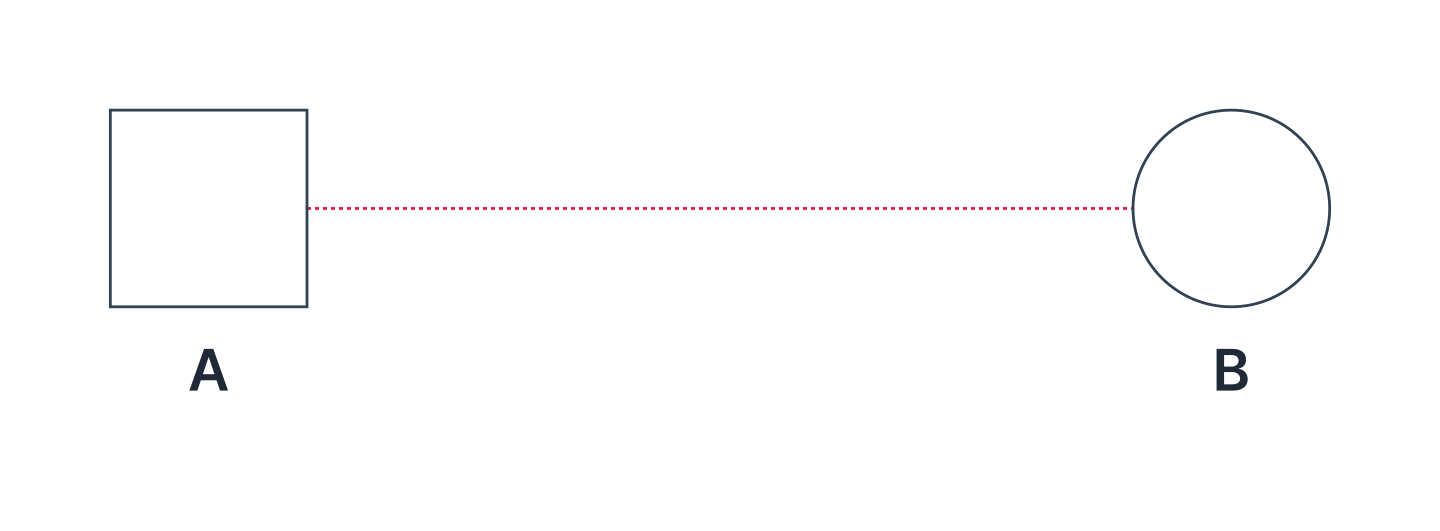
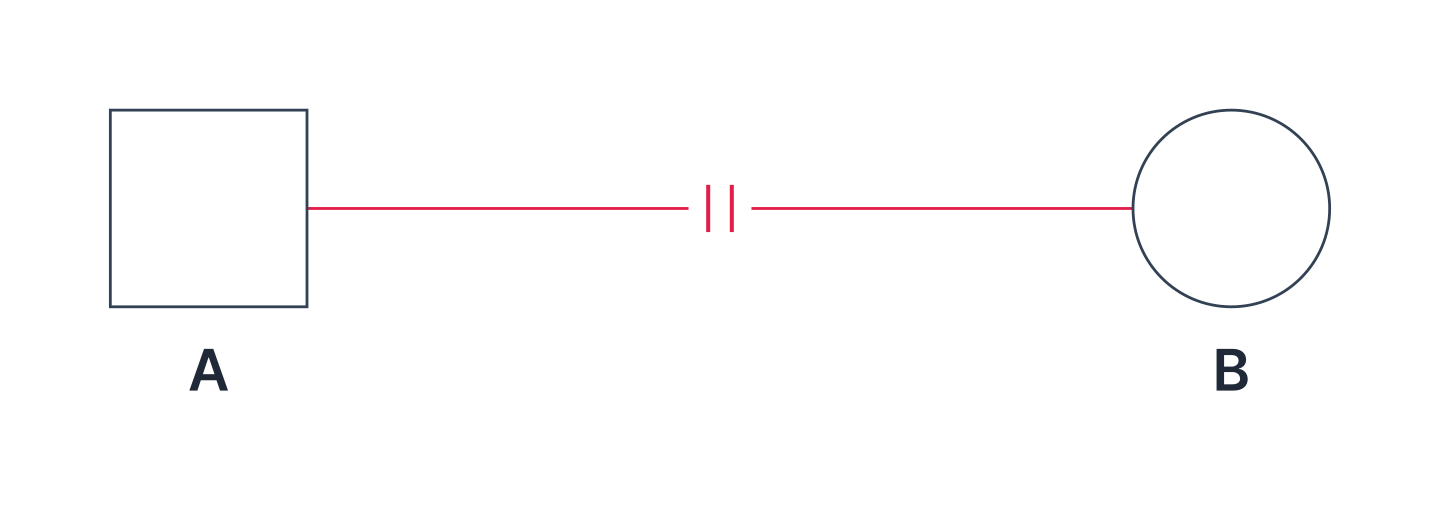
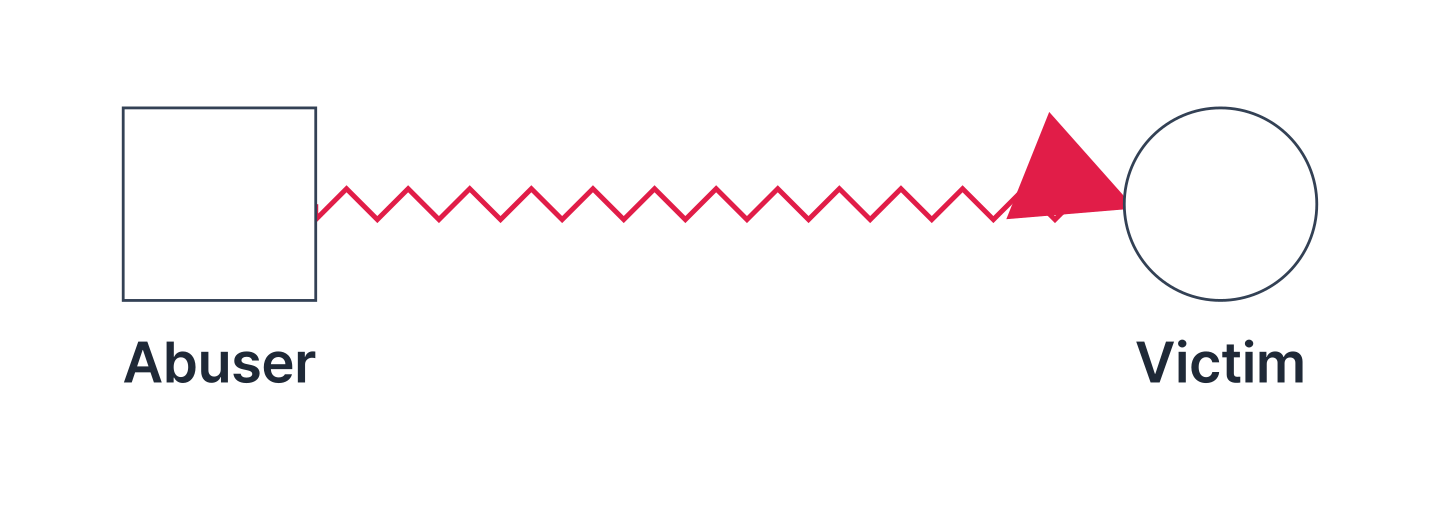
Emotional relationship lines are read by how many strands they have and what shape they take. More parallel lines mean a closer bond: two lines are close and three lines are fused. A zigzag is hostile, a dotted line is distant and a line broken in the middle is a cutoff. An arrowhead marks a relationship with a direction, such as abuse.
Some textbooks call a fused relationship enmeshed, a hostile one conflictual, and a fused-hostile one fused and conflictual; they are the same symbols as in this chart. The colors and shapes of emotional lines can differ between editions and institutions, so if your institution or professional association has guidelines, follow those first.
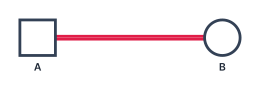
Close
Two parallel lines
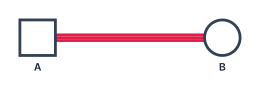
Fused
Three parallel lines
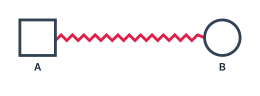
Hostile
Zigzag line
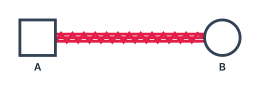
Fused-hostile
Zigzag over three parallel lines
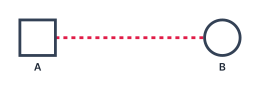
Distant
Dotted line
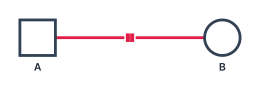
Cutoff
Line broken in the middle
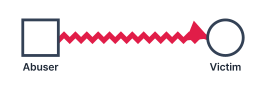
Abuse
Zigzag arrow pointing from the abuser to the victim
Which literature do genogram symbols follow?
This chart follows the standard notation set out in the genogram literature of McGoldrick, Gerson and Petry.
- McGoldrick, M., & Gerson, R. (1985). Genograms in Family Assessment. W. W. Norton.
- McGoldrick, M., Gerson, R., & Petry, S. (2020). Genograms: Assessment and Treatment (4th ed.). W. W. Norton.
Details of the notation differ between editions and institutions. This page summarizes the notation used in common across the works above; where your institution or professional association has guidelines, they take precedence.
How to draw a genogram →See completed genogram examples →How to choose genogram software →
Written by the Auruda editorial team · Last reviewed 2026-10-27 · This page does not replace clinical judgment.